

Construction Methods & Building Systems in Jacksonville, FL
Professional Construction Methods & Building Systems in Jacksonville, FL — Licensed, Insured & Locally Owned
ShayCore, LLC provides expert construction methods & building systems in Jacksonville, FL. CBS, ICF, elevated foundations & more. Call (904) 551-2592 today.
- Licensed & Insured
- Locally Owned & Operated
- Free Inspection & Estimate
Request Your
Free EstimateConstruction methods and building systems encompass the full range of structural approaches, framing techniques, foundation systems, mechanical integration, and material choices used to erect safe, durable, and code-compliant structures. In Jacksonville, FL — a coastal metro built on a complex mix of sandy coastal soils, high water tables, and hurricane-prone terrain — selecting the right construction method is not merely a preference; it is a necessity shaped by local environmental realities.
ShayCore, LLC brings deep local knowledge to every project in the Jacksonville area. Our team understands the nuances of building in Northeast Florida, from navigating Duval County permitting requirements to engineering structures that stand up to Category 1 through Category 4 hurricane-force winds, persistent humidity averaging 75% annually, and the unique soil profiles found across Jacksonville’s diverse neighborhoods. Whether you are planning a new residential build, a light commercial project, or a major structural renovation, ShayCore, LLC delivers construction solutions engineered specifically for Jacksonville’s conditions. Call us today at (904) 551-2592 to discuss your project.
Understanding Construction Methods & Building Systems in Jacksonville
Construction methods refer to the systematic processes, materials, and structural frameworks used to build a structure from the ground up — or to substantially alter an existing one. Building systems encompass the integrated components that make a structure functional: structural framing, foundation engineering, roofing assemblies, moisture management, mechanical/electrical/plumbing (MEP) systems, and thermal envelopes.
Historically, Jacksonville’s construction landscape has evolved dramatically. In the early 20th century, following the Great Fire of 1901 that destroyed 146 city blocks, Jacksonville rapidly rebuilt using masonry and brick construction to reduce fire risk. By mid-century, concrete block construction (CBS — Concrete Block Structure) became the dominant residential building method throughout Duval County, a trend driven by Florida’s Building Code evolution following multiple devastating hurricane seasons. Today, Jacksonville sees a dynamic mix of wood-frame, CBS, insulated concrete form (ICF), steel-frame, and modular construction methods deployed across its sprawling 874 square miles — the largest land area of any city in the contiguous United States.
Jacksonville’s building stock is remarkably diverse. The historic Riverside and Avondale neighborhoods feature Craftsman bungalows and colonial revival homes built between 1900 and 1940, primarily wood-frame with pier foundations. The Southside, Mandarin, and Bartram Park corridors reflect post-1990s CBS residential construction. Downtown Jacksonville includes a growing portfolio of mid-rise steel and concrete commercial structures. The Northside and Jacksonville Beach areas present unique coastal construction challenges requiring elevated foundations and wind-resistant framing.
Modern building systems in Jacksonville must comply with the Florida Building Code (FBC), 8th Edition, which includes stringent requirements for wind load resistance (110 to 150 mph design wind speeds depending on zone), flood zone construction standards set by FEMA Flood Insurance Rate Maps, and energy efficiency mandated by Florida Energy Conservation Code. Understanding which construction methods align with these regulations — and with Jacksonville’s specific environmental profile — is the foundation of every project ShayCore, LLC undertakes.
Learn More About Florida Building Code Compliance
Why Construction Methods & Building Systems Matter in Jacksonville, FL
Hurricane Wind Loads and Coastal Exposure
Jacksonville falls within the Florida Building Code’s Wind Speed Zone requiring designs capable of withstanding basic wind speeds of 120 mph (ASCE 7-16 standard) in most inland Duval County zones, rising to 130–140 mph in coastal and beachside communities like Jacksonville Beach, Atlantic Beach, and Neptune Beach. Hurricane Matthew (October 2016) brought sustained winds of 75 mph and gusts exceeding 90 mph to Jacksonville, causing over $1 billion in regional damage and exposing structural weaknesses in older wood-frame homes built before modern wind-resistant code updates. Building methods must integrate hurricane straps, impact-resistant roofing, reinforced concrete tie-beams, and engineered sheathing systems to meet these standards.
Soil Conditions: Sandy, Saturated, and Unstable
Jacksonville sits atop the Trail Ridge and Coastal Lowlands soil series — predominantly fine quartz sand with low bearing capacity ranging from 1,500 to 2,500 pounds per square foot (psf) in many areas, compared to 4,000+ psf in more stable soils found inland. In low-lying neighborhoods like Ortega, Mandarin riverfront zones, and much of the Northside near the Nassau River floodplain, soil saturation is a persistent concern. The shallow water table — often as little as 18 to 36 inches below grade in flood-prone zones — necessitates deep foundation pilings, grade beam systems, or engineered slab thickening strategies that differ significantly from inland construction practices.
Flooding and FEMA Flood Zones
Approximately 35% of Jacksonville’s land area lies within FEMA-designated Special Flood Hazard Areas (SFHA), including significant portions of the Arlington, Southside near Julington Creek, and downtown floodplain areas. Hurricane Irma (September 2017) produced a record 3.6-foot storm surge at the St. Johns River gauge near downtown Jacksonville — the highest ever recorded — inundating hundreds of structures. Flood-zone construction requires elevated first-floor elevations (BFE + 1 to 2 feet of freeboard), flood-resistant foundation materials, and mechanical systems relocated above flood levels. Construction methods that ignore these realities expose property owners to devastating losses.
Humidity, Mold, and Moisture Management
Jacksonville averages 54 inches of rainfall annually — well above the national average of 38 inches — and relative humidity regularly exceeds 80% during the May through September rainy season. This persistent moisture load demands that building envelope systems, vapor barriers, insulation choices, and HVAC design all work in concert to manage moisture intrusion and prevent mold colonization. Neighborhoods like Springfield and Riverside, with aging wood-frame homes built before modern moisture barriers were standard, face particular vulnerability without proper remediation and envelope upgrades during renovation.
Expansive Development and Infrastructure Strain
Jacksonville’s rapid westward and southward expansion into St. Johns County’s border communities — including areas around Nocatee and the Oakleaf Plantation corridor — creates infrastructure coordination challenges. New construction in these growth corridors must account for fill soil compaction variability, utility corridor planning, and site-specific drainage engineering, all of which influence the optimal construction method for each project.
Signs You Need Expert Construction Methods & Building Systems Guidance
For New Construction Projects
- Your site sits within a FEMA AE, VE, or X-shaded flood zone and you are unsure of elevation certificate requirements
- Soil borings reveal bearing capacity below 2,000 psf, indicating potential foundation system upgrades are needed
- Your project is within a mile of the St. Johns River, Intracoastal Waterway, or Atlantic coastline
- You are building in a wind-borne debris region requiring impact-rated windows and reinforced wall assemblies
For Existing Structures Showing Distress
- Cracks wider than 1/4 inch appearing diagonally at window corners or door frames — indicating potential differential settlement
- Doors and windows that stick or fail to close properly after a wet season
- Visible floor bounce or deflection greater than L/360 in wood-frame areas
- Water staining at slab perimeter suggesting inadequate grade beam drainage
- Roof-to-wall connections that show visible separation or rust-stained fastener lines
Urgency Indicators
- A hurricane watch or warning is issued for the Jacksonville area and your structure has not been assessed for wind resistance
- Interior flooding has occurred and structural components may have been compromised
- Permits have been flagged by Duval County Building Inspection Services for non-compliance
Our Construction Methods & Building Systems Process in Jacksonville
ShayCore, LLC follows a disciplined, Jacksonville-optimized process to ensure every project is planned, permitted, and executed to the highest standard.
Site Evaluation and Soil Assessment (Days 1–5)
We begin with a comprehensive site visit to evaluate topography, proximity to flood zones, existing vegetation, setbacks, and access. Where needed, we coordinate geotechnical soil borings to determine bearing capacity and water table depth specific to your Duval County parcel. This data directly informs our foundation system recommendations.
Flood Zone and Wind Zone Analysis (Days 3–7)
We obtain your FEMA Flood Insurance Rate Map (FIRM) panel data and Elevation Certificate (if existing) to determine your Base Flood Elevation (BFE). We cross-reference Duval County’s wind speed maps to identify your structural design wind speed — critical for hurricane strap, sheathing, and roof-to-wall connection specifications.
Construction Method Selection (Days 5–10)
Based on site data, project scope, budget parameters, and code requirements, we present you with a structured recommendation of the optimal construction method — whether CBS, wood-frame, ICF, steel-frame, or a hybrid system — with clear documentation of why each recommendation suits your specific Jacksonville location and project goals.
Design Coordination and Permitting (Weeks 2–6)
We coordinate with licensed architects and structural engineers to produce permit-ready construction documents. We submit to Duval County Building and Development Services and manage the review process, including responses to Requests for Additional Information (RAIs) that are common in flood zone and coastal overlay district submissions. Current Duval County permitting timelines average 4–8 weeks for residential projects.
Mobilization and Site Preparation (Week 6–8)
With permits in hand, we mobilize crews, establish erosion and sediment controls per St. Johns River Water Management District (SJRWMD) requirements, and prepare the site — including any required fill, compaction testing, or dewatering for high water table conditions.
Structural Construction and Systems Integration (Weeks 8–30+, project-dependent)
Foundation, framing, roofing, and building systems are constructed in sequenced phases with scheduled Duval County inspections at foundation, framing, rough MEP, insulation, and final stages. We adapt our sequencing to Jacksonville’s rainy season, prioritizing roof closure and dry-in milestones before June if possible.
Final Inspection and Certificate of Occupancy (Project Close)
We coordinate final inspections with Duval County Building Inspection Services and obtain the Certificate of Occupancy, providing you with a complete permit closeout package and maintenance documentation.
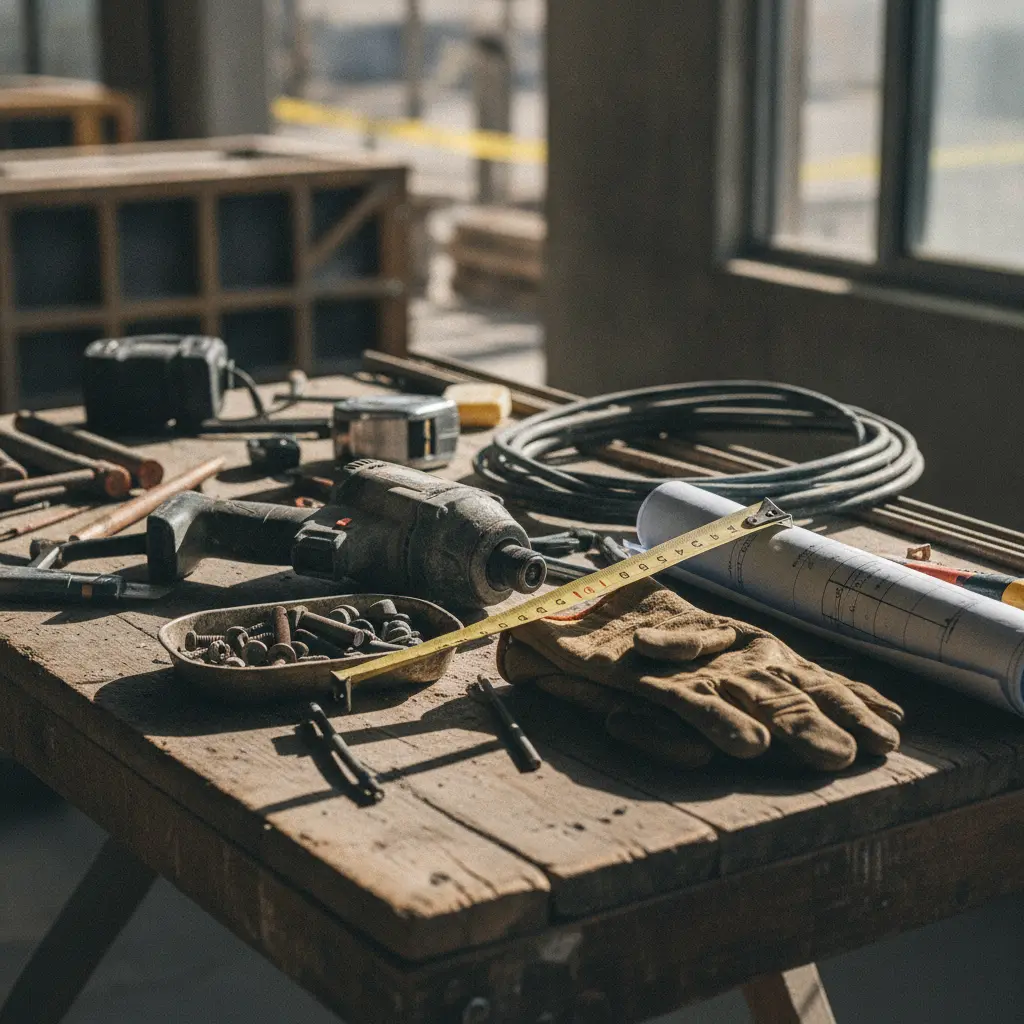
Our team in action — commercial-construction professionals serving Jacksonville
Construction Methods & Building System Approaches We Use in Jacksonville
1. Concrete Block Structure (CBS) Construction
The dominant residential method in Duval County, CBS construction uses reinforced concrete masonry units (CMU) filled with steel rebar and grout. CBS is ideal for Jacksonville’s hurricane exposure zones, offering superior wind resistance and pest resistance against the Formosan termite populations prevalent in Northeast Florida. Best suited for: single-family residential, small commercial, and additions in established Jacksonville neighborhoods.
2. Wood-Frame Construction
Engineered wood-frame construction using advanced framing techniques (24″ o.c. framing, structural sheathing, and stainless-steel hurricane straps) offers cost efficiencies for residential projects in lower-exposure wind zones. Required moisture barriers and pressure-treated lumber are mandatory in Jacksonville’s high-humidity environment. Best suited for: interior renovations, additions in Riverside/Avondale historic districts, and projects with strict budget parameters.
3. Insulated Concrete Form (ICF) Construction
ICF systems pour concrete between insulated foam forms, creating highly energy-efficient, wind-resistant walls with R-values of R-22 to R-50. In Jacksonville, where summer cooling loads are extreme — average July highs of 92°F with heat indices above 100°F — ICF dramatically reduces energy costs and provides superior storm protection. Best suited for: high-performance custom homes, coastal construction, and commercial buildings in wind zone D.
4. Steel-Frame Construction
Light-gauge and structural steel framing provides exceptional strength-to-weight ratios and resistance to termite damage — a critical advantage in Jacksonville’s termite-active environment. Steel is preferred for commercial, industrial, and multi-story residential projects, particularly in Downtown Jacksonville’s redevelopment corridor and Southside commercial zones.
5. Elevated and Pile Foundation Systems
In FEMA VE and AE flood zones — prevalent in Jacksonville Beach, Neptune Beach, and St. Johns River floodplain areas — structures are built on concrete pilings or helical piers elevating living areas 8 to 14 feet above grade. This method, combined with breakaway wall systems on lower levels, is the code-compliant standard for coastal Jacksonville construction.
Ready for Construction Methods & Building Systems? Get Your Free Estimate Today.
ShayCore, LLC serves Jacksonville and the surrounding area — we’ll be on-site within 24 hours.
📞 Call (904) 551-2592Construction Methods & Building Systems Cost in Jacksonville, FL
Understanding cost expectations for construction in Jacksonville helps you plan effectively and evaluate proposals with confidence.
Typical Cost Ranges
- CBS Residential Construction: $160–$220 per square foot for new construction in standard Duval County residential zones, depending on finishes and systems complexity
- Wood-Frame Residential Construction: $140–$190 per square foot, with premium for hurricane-strapping and enhanced moisture management systems
- ICF Construction: $190–$260 per square foot — higher upfront cost offset by 30–50% energy savings over time in Jacksonville’s high-cooling-demand climate
- Steel-Frame Commercial: $250–$400+ per square foot depending on occupancy type, MEP complexity, and finish level
- Elevated Pile Foundation Systems: $25,000–$75,000+ as a standalone foundation scope, depending on pile depth, diameter, and site conditions
Jacksonville-Specific Cost Factors
- Flood Zone Compliance: Projects in FEMA AE or VE zones add $15,000–$50,000 in foundation and envelope upgrade costs
- Wind Mitigation Upgrades: Hurricane-rated windows, impact doors, and engineered roof-to-wall connections add $8,000–$25,000 to a typical Jacksonville home
- Permitting and Impact Fees: Duval County impact fees for new residential construction average $8,000–$15,000 depending on size and zone
- Soil Remediation: If soil bearing capacity is insufficient, pile or grade beam upgrades add $10,000–$40,000
Contact ShayCore, LLC at (904) 551-2592 for a detailed, site-specific estimate tailored to your Jacksonville project.
Request a Free Construction Estimate
Jacksonville Neighborhoods We Serve
Riverside & Avondale (Built 1900–1940)
One of Jacksonville’s most architecturally significant historic districts, Riverside and Avondale feature wood-frame Craftsman bungalows, Tudor Revivals, and early Colonial designs on pier foundations. Construction work here requires historic district design compliance, careful moisture management in aging wood structures, and sensitive foundation assessments given shallow original footings.
Southside & Bartram Park (Built 1985–Present)
Jacksonville’s fastest-growing suburban corridor features predominantly CBS residential construction. Proximity to Julington Creek and Pablo Creek flood zones requires ongoing awareness of FEMA map amendments and drainage system performance.
Arlington (Built 1950s–1980s)
This mid-century neighborhood east of the St. Johns River includes a mix of CBS and early wood-frame construction. Many Arlington homes sit in AE flood zones with outdated drainage infrastructure, creating particular challenges for renovation and addition projects.
Jacksonville Beach & Atlantic Beach (Coastal, All Eras)
Beachside communities require the most rigorous wind and flood-resistant construction methods in the Jacksonville metro, with VE zone classifications in many oceanfront parcels and design wind speeds reaching 140 mph.
Northside (Built 1960s–2000s)
A large, diverse area with CBS and wood-frame construction across varying flood exposure levels near the Nassau River corridor and I-295 growth zones, requiring site-specific soil and drainage evaluation on most projects.
Construction & Building System Maintenance Tips for Jacksonville Homeowners
- Inspect Roof-to-Wall Connections Annually: Before hurricane season (June 1), verify that hurricane straps are free of rust and that roof sheathing connections remain intact — Jacksonville’s salt air accelerates metal corrosion.
- Check and Clean Gutters Every April and October: Jacksonville’s heavy summer rainfall (averaging 7 inches per month June–August) overloads clogged gutters and directs water against foundation walls.
- Monitor Foundation Perimeter Grade: Ensure soil grades away from your slab or stem wall at a minimum of 1 inch per foot for the first 6 feet — critical given Jacksonville’s flat topography.
- Inspect and Treat for Termites Annually: Formosan and Eastern subterranean termites are highly active in Duval County’s warm, moist soil. Annual treatment is essential for all wood-frame components.
- Test and Service HVAC Drainage Systems Semi-Annually: Condensate lines clog rapidly in Jacksonville’s humid summers, causing interior moisture damage to walls and ceilings.
- Re-caulk Exterior Penetrations Every 3–5 Years: UV degradation from Jacksonville’s intense sun exposure (averaging 233 sunny days per year) breaks down elastomeric caulk at windows, doors, and pipe penetrations.
- Review Your Elevation Certificate After Any FEMA Map Update: Duval County participates in ongoing FEMA Letter of Map Amendment processes; your flood zone status can change, affecting insurance and future construction compliance.
Why Choose ShayCore, LLC for Construction Methods & Building Systems in Jacksonville
ShayCore, LLC is rooted in Jacksonville, FL — we are not a national franchise dispatching crews unfamiliar with Northeast Florida’s building environment. Our team has hands-on experience navigating Duval County’s permitting office, coordinating with the St. Johns River Water Management District, and engineering solutions for the specific soil profiles, flood zones, and wind exposure conditions found across Jacksonville’s 874 square miles.
We bring a meticulous approach to every project — whether it is a new CBS home in Bartram Park, an elevated coastal build in Jacksonville Beach, or a historic renovation in Riverside. Our process is transparent: we provide detailed, itemized proposals with clear cost breakdowns and honest timelines so you can plan with confidence.
ShayCore, LLC is committed to code compliance, quality craftsmanship, and client communication at every phase. When you choose us, you gain a partner who knows Jacksonville’s construction landscape from the soil up.
Ready to start your project? Call ShayCore, LLC today at (904) 551-2592.
Learn More About ShayCore, LLC
Frequently Asked Questions: Construction Methods & Building Systems in Jacksonville, FL
Q: What is the best construction method for a new home in Jacksonville?
A: For most Jacksonville locations, Concrete Block Structure (CBS) construction is the preferred method due to its superior hurricane wind resistance, termite resistance, and alignment with Florida Building Code requirements. However, in high-performance or coastal builds, Insulated Concrete Form (ICF) or elevated pile systems may be more appropriate. ShayCore, LLC evaluates your specific site, flood zone, and budget before making a recommendation.
Q: How much does new construction cost in Jacksonville, FL?
A: New residential construction in Jacksonville typically ranges from $140 to $260 per square foot depending on the building method, site conditions, flood zone requirements, and finish selections. Coastal and flood-zone projects carry higher costs due to elevated foundation systems and wind-resistant envelope requirements. Contact us at (904) 551-2592 for a project-specific estimate.
Q: How do Jacksonville’s flood zones affect construction?
A: Approximately 35% of Jacksonville’s land area is within a FEMA Special Flood Hazard Area (SFHA). Structures in AE or VE flood zones must be built with first-floor elevations at or above the Base Flood Elevation (BFE) — typically with 1–2 feet of additional freeboard. Flood zone compliance affects foundation design, material selection, mechanical system placement, and insurance costs.
Q: How long does it take to build a new home in Jacksonville?
A: From permit submission to Certificate of Occupancy, a new single-family home in Jacksonville typically takes 9 to 14 months. Duval County permitting averages 4–8 weeks for residential reviews. Construction duration depends on project size, method, weather delays during the June–September rainy season, and inspection scheduling availability.
Q: Are there specific building code requirements unique to Jacksonville?
A: Yes. Jacksonville falls under the Florida Building Code (8th Edition), with local Duval County amendments. Key local requirements include wind speed design criteria ranging from 120–140 mph depending on zone, FEMA flood zone elevation requirements, SJRWMD stormwater and environmental permitting, and Duval County zoning overlay districts including the Historic District Design Guidelines for Riverside, Avondale, and Springfield.
Q: Can I renovate a historic home in Riverside or Avondale with modern building systems?
A: Yes, but renovation in Jacksonville’s historic districts requires Architectural Review Committee (ARC) approval for exterior modifications. Modern building systems — including updated electrical, plumbing, HVAC, and insulation — can typically be integrated without impacting historic character if the work is planned carefully. ShayCore, LLC has experience managing the ARC coordination process.
Q: What wind mitigation features are required in Jacksonville new construction?
A: Florida Building Code requires hurricane straps at every rafter-to-wall connection, structural sheathing with code-specified fastening patterns, impact-resistant or protected openings in wind-borne debris regions, and reinforced roof-to-wall connections. In coastal zones like Jacksonville Beach and Atlantic Beach, requirements are even more stringent, including design wind speeds of 130–140 mph.
Q: Does ShayCore, LLC serve areas outside of Jacksonville proper?
A: ShayCore, LLC serves the greater Jacksonville metro area, including Atlantic Beach, Neptune Beach, Jacksonville Beach, the Oakleaf Plantation corridor, and surrounding Duval County communities. Call us at (904) 551-2592 to confirm service availability for your specific location.
Start Your Jacksonville Construction Project with ShayCore, LLC
Whether you are building a new home in Bartram Park, renovating a historic bungalow in Riverside, or planning a coastal build in Jacksonville Beach, ShayCore, LLC is Jacksonville’s trusted partner for construction methods and building systems that perform — through hurricane season, summer downpours, and for decades to come.
Do not leave your project to chance or to contractors unfamiliar with Duval County’s unique building environment. ShayCore, LLC brings local expertise, code compliance knowledge, and a commitment to quality that Jacksonville homeowners and developers count on.
Call us today at (904) 551-2592 to schedule your consultation. We are ready to put Jacksonville’s best construction methods to work for you.
Contact ShayCore, LLC Today